Rooftop Solar Approvals in India: What to Expect and How Long It Takes
This article explains the typical approval process, timelines, and common mistakes, and how working with an experienced solar partner can make approvals smooth and hassle-free.
Yash Jakhete
Co-Founder
One of the biggest concerns people have before installing rooftop solar is approvals.
Questions like:
“Will this get stuck in paperwork?”
“How long will approvals take?”
“Do I need to follow up with the electricity department?”
The good news is: rooftop solar approvals in India are fairly standardised today, and when handled correctly, they don’t have to be stressful or time-consuming.
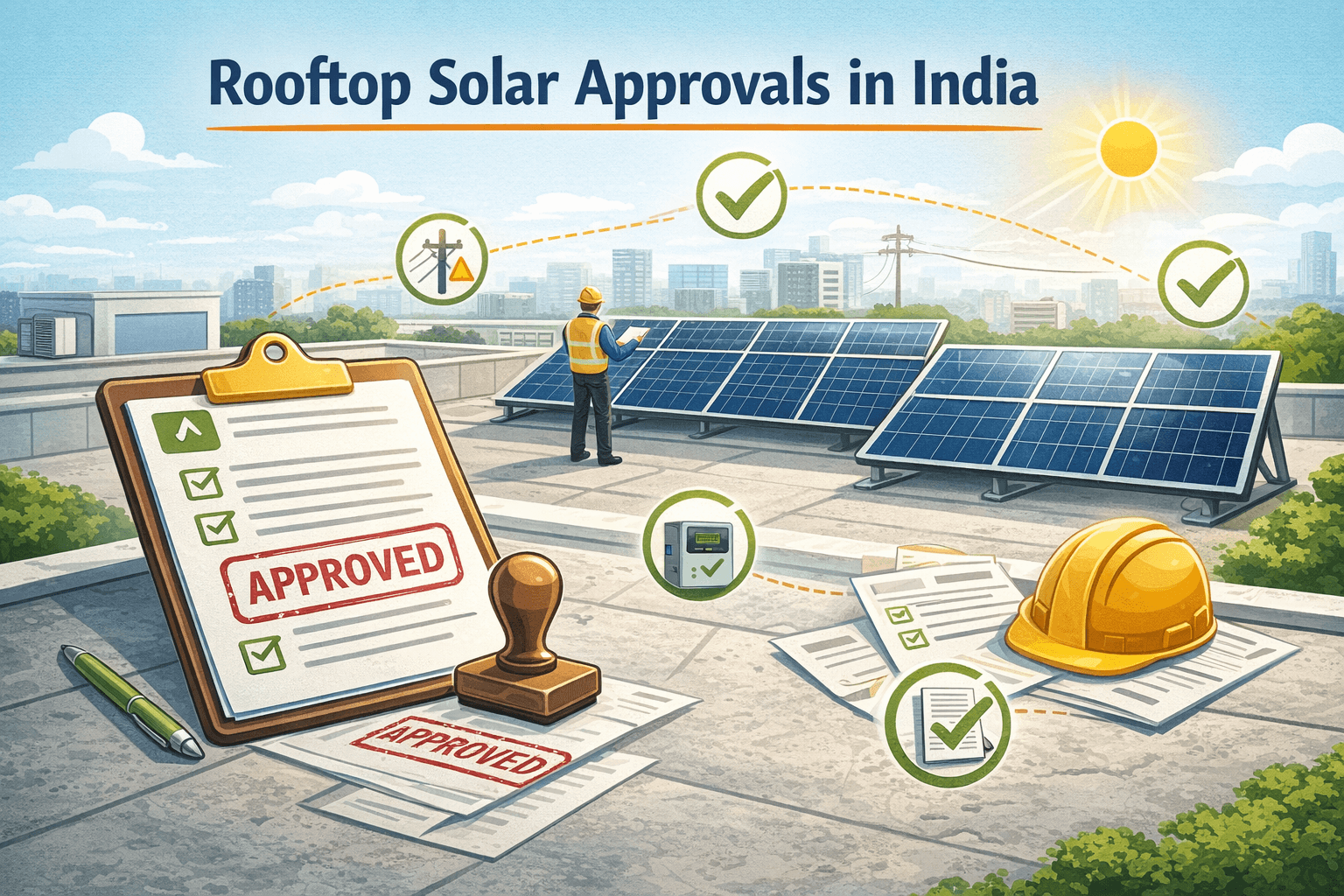
What approvals are required for rooftop solar?
The exact approvals depend on your location and system size, but typically include:
1. Utility (DISCOM) approval
If your system is connected to the grid, the local electricity distribution company needs to approve:
System capacity
Metering arrangement
Safety compliance
This ensures your solar system meets grid and safety standards.
2. Net metering (where applicable)
Net metering allows excess solar power to be exported to the grid and adjusted against your bill.
Approval timelines and rules vary slightly across states and DISCOMs.
3. Electrical safety compliance
This includes:
Proper earthing
Electrical protection devices
Compliance with local electrical codes
These are important not just for approvals, but also for long-term safety.
How long do approvals usually take?
In most parts of India, rooftop solar approvals typically take a few weeks, depending on:
DISCOM processes
Completeness of documentation
System size
Delays usually happen when:
Applications are incomplete
System design doesn’t meet guidelines
Follow-ups are not handled proactively
This is where experience makes a big difference.
Common approval-related mistakes to avoid
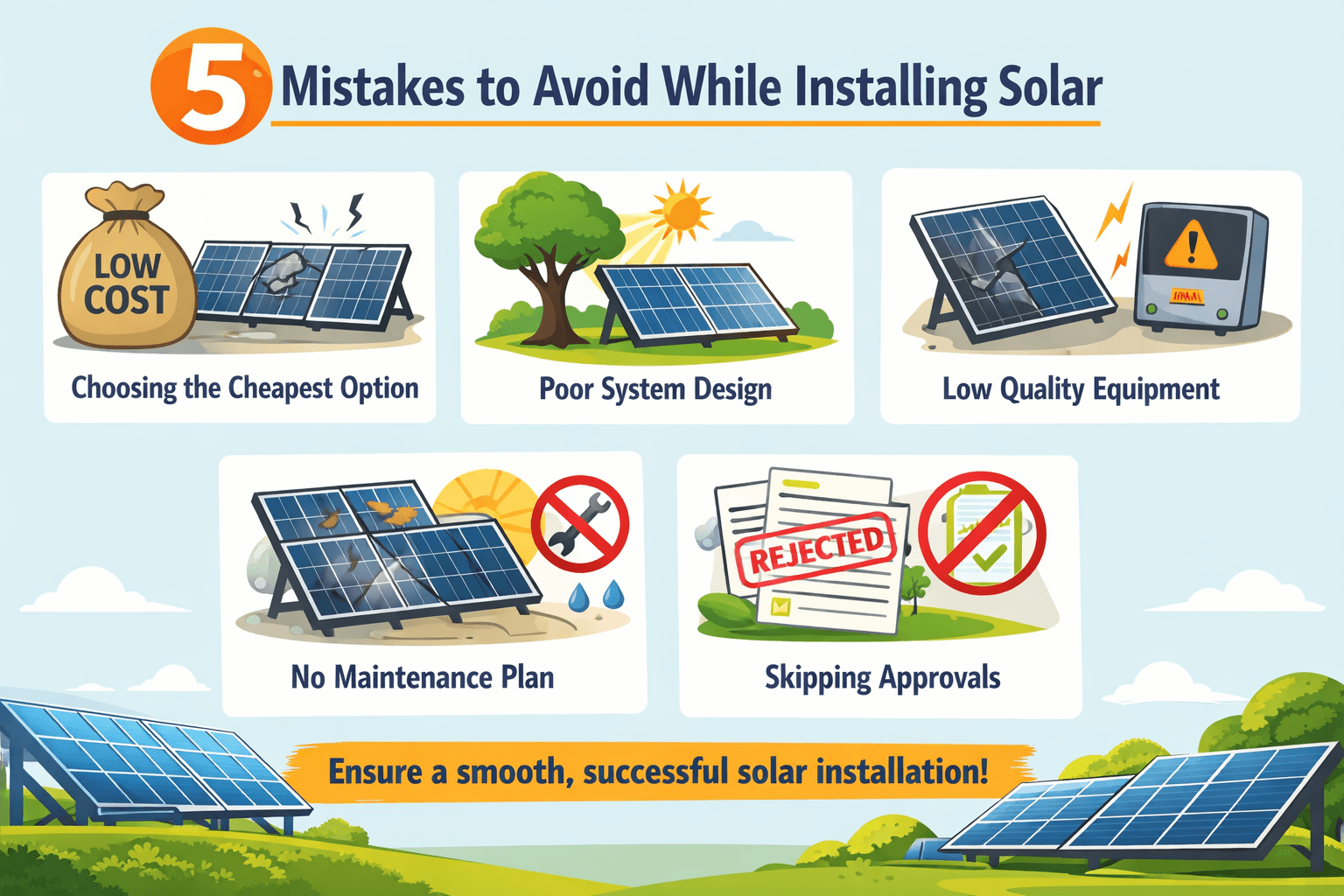
1. Starting installation before approvals
This can lead to rework or even rejection later.
2. Poor documentation
Missing drawings, incorrect forms, or mismatched system details often cause delays.
3. Non-compliant system design
Incorrect protection devices or wiring standards can lead to inspection failures.
Why approvals should not be taken lightly
Approvals are not just paperwork. They ensure:
Your system is safe
Your insurance remains valid
You don’t face future legal or operational issues
A system that is not properly approved may work initially, but can create serious problems later.
How Solarising simplifies approvals
At Solarising, approvals are treated as a core part of the project, not an afterthought.
We handle:
Application preparation and submission
Coordination with DISCOMs
Compliance with local guidelines
Inspection readiness
Our goal is simple: you shouldn’t have to chase anyone or worry about forms.
The right takeaway
Rooftop solar approvals are manageable when handled correctly. With the right partner, the process is smooth, predictable, and stress-free.
If approvals feel confusing or intimidating, it’s usually a sign that you need a team that knows the process well — not a reason to avoid solar.
Solarising takes care of approvals end-to-end, so you can focus on your business while your solar system moves forward.
Share on social media